





MUMBAI, 10 July 2025: As global food demand continues to rise and climate change brings unpredictable challenges, the agricultural sector is undergoing a technological revolution. Smart agriculture, once a futuristic concept, has matured into a robust system of integrated technologies transforming how farmers grow, monitor, and market their produce. In 2025, these innovations are no longer experimental but essential, ensuring higher productivity, resource efficiency, and environmental sustainability.
At the heart of this transformation are five core technologies that are reshaping the future of farming: Internet of Things (IoT), Artificial Intelligence (AI), cloud computing, robotics and automation, and satellite and drone-based remote sensing. Let’s dive deeper into how each of these is changing the face of agriculture.
1. Internet of Things (IoT): Connecting the Farm Like Never Before
The Internet of Things has rapidly evolved from a buzzword to a critical backbone of modern agriculture. In 2025, farmers use networks of IoT-enabled devices—from soil moisture probes and weather stations to livestock trackers and automated irrigation valves—to gather real-time data on every aspect of their farms.
For instance, soil sensors can continuously monitor moisture, nutrient levels, and pH, providing farmers with instant updates through a smartphone or web dashboard. This data enables them to irrigate with pinpoint precision, apply fertilizers only where needed, and optimize planting schedules to match soil health. The result is reduced input costs, improved yields, and far more sustainable use of water and fertilizers.
Livestock operations have also embraced IoT with sensors monitoring animal health, feeding patterns, and even stress levels, allowing for rapid interventions before diseases spread or animals suffer. In a world where transparency is increasingly demanded by consumers, IoT also supports traceability, providing complete histories of produce and livestock from farm to fork.
2. Artificial Intelligence: Data-Driven Decisions
Collecting farm data is only the first step—making sense of it is where artificial intelligence comes in. In 2025, AI-driven platforms analyze enormous volumes of data generated by IoT devices, satellite images, market feeds, and weather forecasts. These platforms deliver actionable recommendations to farmers, such as pest detection alerts, optimized planting patterns, or harvest timing.
AI-based models can also predict disease outbreaks based on weather patterns and pest populations, enabling farmers to act preventively rather than reactively. In addition, computer vision tools use drone or camera images to identify plant health issues at early stages, reducing pesticide use and supporting organic farming.
AI’s role goes even further, enhancing financial inclusion by analyzing farmers’ credit histories, weather risk, and productivity data to support micro-lending and crop insurance decisions. For policymakers, AI enables a clearer understanding of regional or even national food security trends, helping to prioritize resources where they are needed most.
3. Cloud Computing: The Agricultural Command Center
Cloud technology is the unifying platform that makes data accessible and actionable from anywhere. By 2025, cloud computing has become the standard for storing and analyzing massive amounts of agricultural data collected from multiple sources. Farmers, agronomists, researchers, and even policymakers can log in to centralized dashboards that track everything from rainfall forecasts to fertilizer distribution in real time.
Beyond simple data storage, the cloud allows advanced big-data analytics to be performed remotely, eliminating the need for expensive local servers or IT expertise on the farm. It democratizes access, meaning even smallholders with a basic smartphone can leverage sophisticated tools to improve their productivity.
Additionally, cloud platforms foster collaboration across the entire agri-value chain. Supply chain participants, regulators, and consumers can verify certifications, monitor storage conditions, and trace produce movements through blockchain-backed cloud systems—boosting transparency and trust.
4. Robotics and Automation: Revolutionizing Labor and Precision
With labor shortages and rising wage pressures, farmers are increasingly relying on robotics to automate tedious, repetitive, or hazardous tasks. In 2025, autonomous tractors, robotic weeders, and even fruit-picking drones have moved from pilot projects to commercial adoption.
These machines are equipped with advanced sensors and AI algorithms, allowing them to identify crops, distinguish weeds, and apply fertilizers or pesticides with surgical precision. Fruit harvesters, for instance, use robotic arms with machine vision to gently pluck ripe fruits without damaging the plant.
Robots also help reduce overall chemical use and carbon emissions by optimizing every field operation. For farmers, robotics translates into lower dependence on seasonal labor, more consistent quality, and higher operational efficiency.
5. Satellite and Drone-Based Remote Sensing: Eyes in the Sky
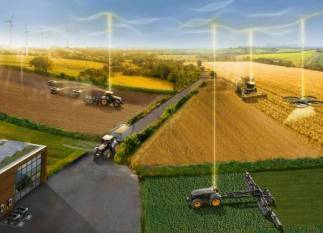
High-resolution satellite imagery and unmanned aerial vehicles (UAVs) have become indispensable for modern farm management. Satellites provide macro-level views of weather events, crop growth, and large-scale pest movements across entire regions, while drones zoom in with centimeter-level detail to spot plant stress, nutrient deficiencies, or irrigation leaks.
In 2025, integration between satellites, drones, and ground-based sensors allows for multi-layered analysis that was unthinkable even a decade ago. Farmers can overlay drone maps of plant health with satellite climate data and local soil sensor feeds to get a holistic view of their fields.
Remote sensing also supports environmental monitoring, from measuring carbon sequestration in soil to tracking illegal deforestation near agricultural lands. With climate adaptation on every policymaker’s radar, these tools are vital for proactive intervention and risk reduction.
The Road Ahead
Together, these core technologies are not only increasing food production but also making farming more sustainable, resilient, and climate-smart. India, for example, has launched digital initiatives to integrate these innovations with its national agricultural extension networks, aiming to reach millions of smallholders with affordable, data-backed advisories.
Global investment in agri-tech is expected to cross $30 billion by 2027, according to industry forecasts, reflecting the world’s faith in smart agriculture as the future of food security. While challenges remain—such as digital literacy gaps, high initial costs, and infrastructure constraints—the momentum is undeniable.
As we advance through 2025, one thing is certain: technology will continue to transform farming from an art based on experience to a science rooted in precision. The next harvest may not just be measured in bushels or tonnes, but in gigabytes and algorithms, empowering farmers to feed the world sustainably and profitably.
Image credit: continental.com