





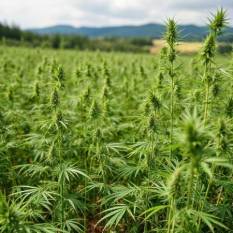


DEHRADUN, 30 June 2025: High in the Himalayan foothills, a silent revolution is taking root. Once regarded with suspicion, industrial hemp is now redefining agriculture in Uttarakhand, offering a sustainable, profitable, and eco-friendly alternative to conventional farming.
Since becoming India’s first state to legalize commercial hemp cultivation in 2018, Uttarakhand has opened the door to what many call "green gold" — a crop that not only thrives in harsh terrain but also revives depleted soils, generates multiple products, and fetches far higher returns than traditional grains.
From Marginal to Magical
For centuries, wild hemp grew freely across Uttarakhand’s slopes. But until recently, its potential lay dormant, curtailed by legal ambiguity and cultural stigma. That’s changed.
Unlike marijuana, industrial hemp contains less than 0.3% THC, making it non-psychoactive and legal under state regulations. And while paddy and wheat strain water resources and erode land quality, hemp conserves water, prevents soil erosion, and rejuvenates the earth.
Its robust roots anchor topsoil, making it ideal for fragile hill terrains. With a short harvest cycle of 4–5 months, it can fit neatly into multi-crop farming strategies, enhancing both productivity and soil health.
Every Part Profitable
- From seed to stalk, every part of the hemp plant has value.
- Seeds are rich in protein and omega fats.
- Stalks yield strong fiber for textiles, ropes, and bioplastics.
- Leaves have nutraceutical and therapeutic uses.
- Even the woody core, or hurds, can be used in construction as hempcrete, a carbon-negative material.
- This multi-output model turns one crop into multiple income streams for hill farmers.
Tailor-Made for the Himalayas
Regions like Tehri, Pauri, Chamoli, and Pithoragarh—with elevations from 800 to 2,500 meters—offer the ideal climate. With medium rainfall, well-drained loamy soils, and plenty of sunshine, these areas can yield up to 3 tons of dry stalk and 500 kg of seeds per acre.
Farmers who once earned INR 30,000 – INR 50,000 per acre annually from grain crops are now seeing returns of INR 1.5 – INR 3 lakh per acre with hemp, especially when linked to processing and direct markets.
Support from Government and Science
Uttarakhand’s Excise Department regulates licenses for hemp cultivation, strictly enforcing THC limits. Simultaneously, bodies like CSIR-IHBT and agricultural universities are developing high-yield, climate-resilient hemp varieties.
Financial support is also increasing—soft loans, subsidies, and cluster farming models are enabling smallholder farmers to share machinery, irrigation, and training.
Creating Jobs and Rural Industries
Beyond farming, hemp-based micro-industries—from CBD oil units to textile manufacturing—are sprouting across the hills, creating local jobs, particularly for women and youth.
Processing, packaging, and value-added product development are reviving village economies and reducing migration to cities.
Healing the Earth, One Field at a Time
Hemp is also a climate warrior. Its rapid growth absorbs up to 15 tons of CO₂ per hectare per year—more than many trees. Its resistance to pests reduces the need for chemical pesticides, while its roots can even remediate toxic soils by absorbing heavy metals.
Challenges on the Path
Yet, obstacles remain. The lack of local processing units forces many farmers to travel long distances, increasing costs. The state is responding by proposing hemp industrial parks with common processing facilities.
Additionally, national-level ambiguity around CBD extraction and THC testing still causes confusion and fear. More public awareness, clear policies, and training programs are urgently needed to dispel myths and enable legal clarity.
A Greener, Prosperous Future
With more investment in infrastructure, licensing reforms, and industry linkages, Uttarakhand could soon emerge as India’s hemp capital. Already aligned with the state's goals for organic farming and rural entrepreneurship, hemp could usher in a new agricultural era—one rooted in sustainability, prosperity, and innovation.
As global demand grows for plant-based, climate-smart solutions, the hills of Uttarakhand may soon become a beacon for green agriculture—where hemp is not just a crop, but a catalyst for change.