





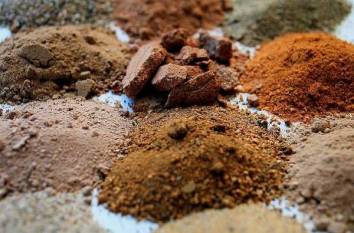


NEW DELHI, 12 May 2025: India’s agricultural prosperity has long been tied to the land beneath its feet. With over 15 distinct soil types spread across its vast subcontinent, India ranks among the most soil-diverse nations in the world.
From the fertile alluvial plains of the Indo-Gangetic belt to the deep black cotton soils of the Deccan Plateau, the country’s soil profiles underpin its agricultural economy, food security, and rural livelihoods. However, increasing pressure from climate change, over-farming, and urbanization threatens to degrade these vital natural resources.
A Rich Palette of Soil Types
India’s soils are broadly classified into eight major categories: alluvial, black, red, laterite, arid, saline, peat, and forest soils. Each has unique characteristics suited to particular crops and climatic zones.
Alluvial soil, found extensively in northern India, especially in states like Punjab, Haryana, Uttar Pradesh, and Bihar, is considered one of the most fertile soil types. Comprising silt, clay, and sand, this soil supports major cereal crops like wheat, rice, and sugarcane.
Black soil, or regur, dominates the Deccan Plateau and is rich in clay and humus. Known for its moisture retention and iron content, it is ideal for growing cotton, earning it the nickname “cotton soil.” Maharashtra, Madhya Pradesh, and Gujarat benefit most from this variety.
Red soil, found in Tamil Nadu, Karnataka, Andhra Pradesh, and eastern states like Odisha, is derived from weathered crystalline rocks. It is rich in iron but poor in nitrogen and humus, making it moderately fertile. With proper irrigation and fertilization, it can support crops like pulses, millet, and oilseeds.
Laterite soil, present in high rainfall areas like Kerala and parts of the Western Ghats, is acidic and low in fertility. Yet it supports crops like tea, coffee, and cashew under suitable management.
Desert soils in Rajasthan and Gujarat support hardy crops such as millet and barley through moisture-conservation techniques, while peat and marshy soils in parts of West Bengal and Kerala are used for paddy cultivation.
Challenges in Soil Management
Despite this rich natural endowment, Indian soils face mounting threats. Soil erosion due to deforestation, overgrazing, and intensive farming is a major concern. The Ministry of Agriculture estimates that nearly 30% of India’s total geographical area is affected by land degradation, reducing agricultural productivity and increasing vulnerability to droughts and floods.
Excessive chemical fertilization, introduced during the Green Revolution, has also taken a toll. Soils in Punjab and Haryana, once the cradle of India’s wheat revolution, now show signs of nutrient exhaustion. Micronutrient deficiencies, particularly of zinc, sulfur, and boron, are increasingly common.
According to the Indian Council of Agricultural Research (ICAR), more than 50% of Indian soils are deficient in at least one or more key nutrients. Organic matter content has declined in many regions, impacting soil structure and water retention capacity.
Moreover, soil salinization due to poor irrigation practices affects over 6 million hectares, primarily in Gujarat, Rajasthan, and Uttar Pradesh. Rising sea levels and saltwater intrusion threaten coastal soils in states like Tamil Nadu and Odisha.
Government and Grassroots Response
To combat these issues, the Indian government launched the Soil Health Card (SHC) Scheme in 2015, aiming to provide farmers with detailed information on soil nutrient levels and tailored recommendations for fertilization. Over 22 crore soil health cards have been issued to date.
Additionally, programs like Paramparagat Krishi Vikas Yojana (PKVY) promote organic farming and the use of bio-fertilizers, while the National Mission for Sustainable Agriculture emphasizes soil and water conservation.
At the grassroots level, non-profits and community groups are promoting agroecological farming practices, including vermicomposting, mulching, and cover cropping, especially in drought-prone regions of Maharashtra and Bundelkhand.
The Way Forward: Regenerative Practices
Experts advocate for a transition to regenerative agriculture that restores soil health while sustaining productivity. This includes:
Crop rotation and diversification to reduce pest build-up and improve soil fertility
Reduced tillage to maintain soil structure and microbial health
Use of organic matter like compost and green manure
Precision farming and drip irrigation to minimize water use and nutrient runoff
“There is a growing realization that we cannot continue with extractive agriculture. Soil is not just a medium for growing crops—it is a living system,” says Dr. R. Ganesan, a soil scientist at the Tamil Nadu Agricultural University.
As climate change increases the frequency of extreme weather events, the resilience of Indian agriculture will depend on how well the country conserves and restores its soil base.
India’s soil wealth is both a natural asset and a national responsibility. Its preservation is crucial not just for food security, but for the health of ecosystems and the livelihoods of over half a billion people who depend on farming. Balancing productivity with sustainability, India must continue to innovate in policy, science, and community action to protect the very ground it stands on.
By Jagdish Kumar
Image credit: studentprojects.in