





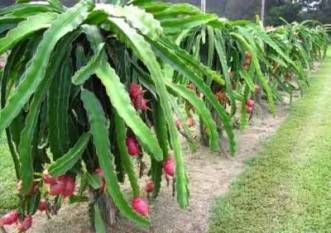


Native to Central and South America and known for its bright pink rind and white pulp dotted with black seeds, dragon fruit is valued for its antioxidant properties, high vitamin C content, dietary fibre, and low calorie profile. The plant begins fruiting within the first year of cultivation and reaches peak productivity in about three to four years, making it a lucrative option for farmers seeking sustainable income.
Currently, over 12 acres in Erode—across Sathyamangalam, Kadambur, Gobichettipalayam and Anthiyur—are under dragon fruit cultivation by five farmers.
S. Nagaraj, a farmer from Kugalur village in Gobichettipalayam taluk, has adopted the trellis method to grow dragon fruit on one acre using 3,850 saplings sourced from Andhra Pradesh. “I invested INR 7 lakh in 2023, and the plants started bearing fruit within a year,” he said. Each plant yields around 15–20 kg of fruit annually, and the harvesting season stretches from June to September.
The fruit, weighing between 300–650 grams, is harvested twice a week and sold to street vendors, local retail chains like Pazhamudir Nilayam, and wholesale markets in Coimbatore. While last year’s price touched INR 150 per kg, this year’s rate dropped to INR 120 due to supply inflows from Bengaluru, where the wholesale rate is around INR 80 per kg.
Despite its adaptability, dragon fruit is sensitive to extreme heat and fungal infections. However, Nagaraj follows natural farming methods, using only cow dung, neem cake, and drip irrigation to maintain soil health and reduce input costs.
Given the crop’s market value, shelf life, and relatively low maintenance, more farmers in the region are expected to shift towards dragon fruit cultivation. TRIBs and agricultural officers in the district are also encouraging its expansion through training programmes and model farms.
“As awareness grows about its nutritional value and commercial viability, dragon fruit is becoming a key component of Erode’s horticultural landscape,” officials said.
Image credit: farmatma.in