





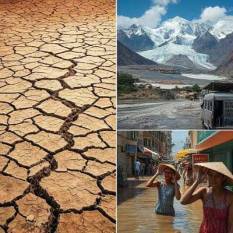


NEW DELHI / GENEVA, 26 June 2025: Asia experienced unprecedented climate extremes in 2024, making it one of the warmest years on record, according to the World Meteorological Organization’s (WMO) State of the Climate in Asia 2024 report.
The continent faced widespread heatwaves, devastating floods, and record-high ocean temperatures, with serious consequences for livelihoods, food security, and ecosystems.
The report highlights that Asia’s warming trend from 1991–2024 was nearly twice as fast as during 1961–1990. The average surface temperature in Asia in 2024 was 1.04°C above the 1991–2020 average, accelerating climate-driven disasters across the region.
“Extreme weather is already exacting an unacceptably high toll,” said WMO Secretary-General Celeste Saulo. “Our report underlines the urgent need for adaptation and early warning systems.”
Record Heat on Land and Sea
Asia’s sea surface warming rate over the past decade was almost double the global average, with 2024 seeing the highest sea temperatures ever recorded. A record share of the ocean was affected by marine heatwaves, disrupting fisheries, coral reefs, and weather patterns.
Land temperatures also soared, particularly in East Asia, where monthly heat records were broken from April to November in Japan, South Korea, and China. Myanmar recorded its highest-ever temperature at 48.2°C.
Himalayan Glaciers at Risk
In the central Himalayas and Tian Shan mountains, 23 out of 24 monitored glaciers lost mass in 2023–2024. Urumqi Glacier No. 1 in China saw its worst-ever ice loss since monitoring began in 1959. Reduced snowfall and extreme heat have raised the risk of glacial lake outburst floods (GLOFs) and long-term water insecurity for millions downstream.
Disasters Worsen Across Asia
The continent endured a wide range of climate disasters in 2024:
- Tropical Cyclone Yagi, the most powerful storm of the year, hit Vietnam, the Philippines, Laos, Thailand, Myanmar, and China.
- Central Asia experienced its worst flooding in 70 years, with 118,000 people evacuated in Kazakhstan and southern Russia.
- The UAE recorded 259.5 mm of rain in 24 hours—the most since 1949.
- Kerala, India, saw over 500 mm of rain in 48 hours in late July, triggering landslides that killed 350+ people.
- Nepal suffered record floods in September, with 246 lives lost and $94 million in damages.
- China faced a major drought, affecting 4.8 million people and damaging over 335,000 hectares of crops, with economic losses exceeding $400 million.
Early Warnings Save Lives
Despite these challenges, early warning systems proved crucial. In Nepal, proactive alerts helped protect over 130,000 people. The report stresses the critical role of national meteorological services, urging continued investment in early warning infrastructure and community-based preparedness.
Key Takeaways from the WMO Report:
- Asia warming 2x faster than the global average.
- Ocean temperatures and marine heatwaves at record levels.
- Himalayan glaciers face severe mass loss.
- Major climate disasters caused mass evacuations, deaths, and billions in damages.
- Early warnings and anticipatory actions helped mitigate loss of life.
The WMO’s report serves as a policy guide for governments, urging faster climate action, enhanced infrastructure resilience, and more robust climate financing in Asia.