







PUNE, 24 June 2025: As India’s farmers battle erratic monsoons and volatile market prices, a quieter but devastating threat is emerging from the forest fringes—wildlife raids that devastate standing crops and erode farmer incomes with almost no warning.
From the elegant blackbuck to the dancing peacock, wild animals may charm city dwellers, but they are a source of financial distress for thousands of rural households. This largely underreported conflict between farming communities and wild herbivores is silently costing the agricultural economy thousands of crores every year.
A recent study by the Centre for Sustainable Development at the Gokhale Institute of Politics and Economics, Pune, surveyed over 1,200 farmers across Maharashtra. The findings were sobering: farmers face severe losses not just from crop destruction by animals such as nilgai, blackbucks, wild boars, elephants, and peacocks, but also from indirect impacts such as additional guarding costs, seasonal delays, and long-term shifts to less profitable crops.
Losses Beyond the Visible
Earlier estimates of damage were based on visual inspection of farms. However, the real burden includes invisible losses: farmers giving up kitchen gardens, cutting down on input costs for fear of failure, or dropping high-yield crops altogether.
In the Konkan region alone, annual crop losses were pegged at ₹1.17 to ₹1.33 lakh per hectare. Combined with kitchen garden destruction in Ratnagiri and Sindhudurg, the regional loss is an estimated ₹5,677 crore annually.
Extrapolated across Maharashtra, total agricultural losses due to wildlife range from ₹10,000 to ₹40,000 crore per year—a number that dwarfs current state support.
By comparison, the Maharashtra Forest Department disbursed a mere ₹210 crore as compensation between 2020 and 2024. Even then, only 48% of claims were accepted, and just 37% were actually paid.
Complex Process, Low Awareness
Compensation for wildlife-related damage in Maharashtra is governed by the Payment of Compensation for Loss, Injury, or Damage Caused by Wild Animals Act, 2023. It requires a panchnama within 14 days involving officials from the forest, agriculture, and revenue departments.
This complex process proves a nightmare for small and marginal farmers, many of whom are unaware of the protocols or deterred by time-consuming procedures. The report found widespread dissatisfaction with the forest department’s damage assessment, citing underreporting, undervaluation, and incomplete reimbursements.
The Human Toll
The damage is not limited to landowners. When crops are destroyed mid-season, farm laborers and local suppliers also lose livelihoods. With 24% of surveyed farmers stating wildlife raids as the primary reason for income loss, and 54% reporting discontinuation of at least one crop, the systemic economic impact is clear.
Interestingly, studies near Tadoba-Andhari Tiger Reserve revealed that farms located beyond 5 km from the forest boundary had nearly double the crop yields compared to those located closer. Even with active guarding, up to 50% of produce can be lost to wildlife.
What Can Be Done?
Experts advocate a complete overhaul of the compensation mechanism. A farmer-friendly system must be simple, time-bound, and holistic—accounting not just for visible damage but also protection costs and opportunity loss.
One solution tested successfully is the “Support cum Reward” model, developed by conservationist Dr. Milind Watve and his team. Their trials showed that agricultural output near protected areas can increase by 2.5 to 4 times if farmers are supported with fencing, advisory services, and incentives for co-existence.
Moreover, empirical research is urgently needed to understand why certain animals repeatedly raid specific farms or crops, and to develop long-term mitigation strategies, such as crop diversification, community fencing, and eco-sensitive zoning.
Conservation Must Include Farmers
India is a megadiverse country, and conservation cannot come at the cost of rural livelihoods. Every wildlife conflict incident strains the relationship between forest departments and local farmers—a dangerous trend that undermines both ecological and economic goals.
“This isn’t a war between ecology and economy,” the report’s authors argue. “It’s a plea for balanced, integrated policymaking that safeguards the interests of both wildlife and the communities living beside them.”
Farmers, they say, are willing participants in finding long-term solutions, provided their incomes and dignity are not sacrificed in the name of conservation.
The Road Ahead
If India is serious about doubling farmer incomes and building climate-resilient agriculture, then addressing wildlife-related crop losses must become a policy priority. Compensation schemes must reflect real-time losses, and departments must be held accountable for timely disbursement.
Technological innovations like drones, remote sensing, and AI-based crop monitoring could help build transparent damage assessment systems, removing discretion and delays.
The success of India’s wildlife conservation story must not be built on the silent suffering of its farmers. Protecting both will require vision, empathy, and structural reform—and the time to act is now.
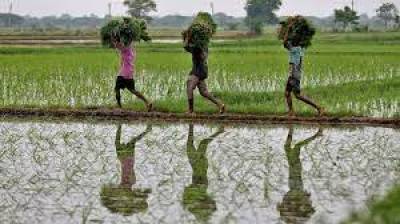
Image credit: moneycontrol.com