




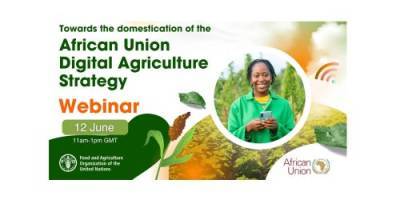


ROME / Italy, 21 June 2025: The Food and Agriculture Organization (FAO) and the African Union Commission (AUC) convened a major virtual session today to explore concrete steps to implement the African Union Digital Agriculture Strategy (2024–2030). The event, attended by over 200 stakeholders from across the continent, emphasized the urgency of moving from policy to action in transforming Africa’s agriculture sector through digital innovation.
Co-hosted by FAO Regional Representative Abebe Haile-Gabriel and AUC’s Agriculture Director Dr Janet Edeme, the session focused on inclusive digital transformation, tackling barriers in connectivity, infrastructure, and financing. Haile-Gabriel called for coordinated efforts:
“Let’s move from isolated pilots to scalable solutions. This is the moment to transition from potential to real impact.”
Country-led Insights & Private Sector Push
Speakers from Senegal, ECCAS, Uganda, and the World Bank presented live examples of integrating real-time production data, AI-powered early warnings, and digital traceability in farming operations.
Senegal’s Agriculture Ministry is piloting tools that connect producers directly with input providers and lenders. ECCAS, representing Central African nations, is embedding digital tools in its regional agricultural policy, focusing on infrastructure and smallholder access.
Parmesh Shah from the World Bank highlighted new investments in digital IDs for farmers, weather data platforms, and farmer-led cooperatives.
“The next leap requires regional harmonization, inclusive innovation, and community-driven roadmaps,” Shah said.
Farmers and Youth at the Center
Representatives from the PanAfrican Farmers’ Organisation (PAFO) and Uganda’s Agriculture Ministry emphasized that digital tools must serve grassroots users.
“Farmers are not just end-users—they must be architects of Africa’s digital future,” said Dr. Babafemi Oyewole, PAFO’s CEO.
Interactive polls showed strong interest in capacity building, digital literacy, and rural connectivity—especially for women and youth, often left out of tech-driven systems.
Three-Tier Strategy Structure
The AU Digital Agriculture Strategy guides implementation at:
Continental Level: policy leadership and knowledge sharing
Regional Level: peer learning and harmonization
National Level: custom strategies aligned with ICT, education, and trade policies
Its seven strategic objectives cover digital infrastructure expansion, inclusive policy-making, regulatory frameworks, and innovative finance models.
Next Steps: National Roadmaps & Resource Mobilization
In closing remarks, FAO Digital Agriculture Lead Ken Lohento and AUC’s Mukulia Kennedy Ayason emphasized that real impact will depend on national strategies, partner investments, and multi-sectoral collaboration.
“We must move swiftly to support Member States, mobilize resources, and make digital agriculture a reality across Africa,” said Ayason.
FAO reaffirmed its technical support role, setting the stage for a new era of innovation-driven, inclusive agriculture on the continent.