





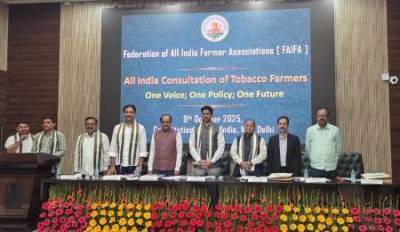


NEW DELHI, 11 November 2025: The Federation of All India Farmer Associations (FAIFA) has condemned the World Health Organization’s Framework Convention on Tobacco Control (WHO-FCTC) for excluding tobacco farmers and their representatives from the upcoming 11th Conference of the Parties (COP11), scheduled from November 17, 2025.
FAIFA, which represents millions of tobacco growers across India, said the decision violates principles of inclusivity and transparency, calling the move “undemocratic and discriminatory.”
“Farmers are not the problem; they are victims of policy decisions taken without their voice,” said PS Murali Babu, President of FAIFA. “It is deeply disappointing that COP11 once again shuts its doors on the farming community, whose livelihoods depend on tobacco crops and who deserve to be heard before any anti-farmer measures are adopted.”
The association said it had made several formal representations requesting that farmer groups be allowed to participate as stakeholders or observers at COP11. However, the COP Secretariat rejected the requests, stating that farmers’ interests were “not aligned” with FCTC objectives — a position FAIFA called “illogical and contrary” to the convention’s own provisions under Articles 17 and 18, which require protection of farmers’ livelihoods and promotion of sustainable alternatives.
India is one of the world’s largest producers and exporters of Flue-Cured Virginia (FCV) tobacco, alongside Brazil, Zimbabwe, the U.S., and China. While the U.S. has not ratified the FCTC and China continues to safeguard its domestic growers, Indian farmers face increasing restrictions from international policies that threaten their incomes and destabilize rural economies in Andhra Pradesh, Karnataka, and Telangana.
FAIFA warned that decisions taken without stakeholder consultation could jeopardize the livelihoods of over 36 million people dependent on the tobacco value chain — including cultivation, curing, trading, and allied sectors.
“Sustainable transition cannot be achieved through exclusion,” the statement said. “Real change comes through participation and constructive engagement with those whose lives are directly affected.”
FAIFA urged the Government of India’s delegation to COP11 to protect the interests of domestic tobacco farmers and ensure that no policy leads to:
Loss of livelihood for growers,
Disruption of legal and export-oriented tobacco trade, or
Unilateral decisions without farmer consultation.
“The spirit of the FCTC lies in cooperation and protection of livelihoods, not coercion and exclusion,” FAIFA said, appealing to the WHO and FCTC Secretariat to “respect farmers’ rights to be heard in all decisions affecting their future.”