





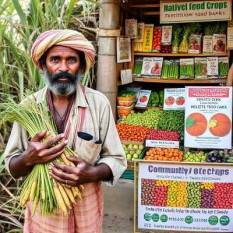


BHUBANESWAR, 18 June 2025: In a move to revive Odisha’s rich agricultural heritage and traditional food systems, the state government has launched a new scheme titled ‘Revival and Sustainable Intensification of Forgotten Food and Neglected Crops in Odisha’.
The initiative aims to promote ecological agriculture, conserve indigenous crops, and empower tribal farming communities.
Rolled out by the Department of Agriculture & Farmers’ Empowerment, the scheme will be implemented across 25 blocks in 15 districts from 2025–26 to 2029–30, directly impacting 60,000 farmers, particularly those in ecologically rich and biodiversity-sensitive areas.
“This initiative will not only support ecological agriculture but also restore food heritage and empower tribal farmers,” said Dr. Arabinda Kumar Padhee, Principal Secretary of the department.
Odisha is home to 64 tribal communities, many of whom have traditionally preserved diverse crop varieties and forest foods. The government sees these communities as custodians of agrobiodiversity, whose indigenous knowledge can serve as a foundation for resilient and sustainable food systems.
Key Components of the Scheme:
- Germplasm Collection & Cultural Documentation: Systematic preservation of seeds and associated food traditions.
- Custodian Farmer Network: Promotion of community-run live seed banks and incentives for cultivating forgotten landraces.
- Post-Harvest Infrastructure: Investments in value addition, storage, and rural processing units.
- Awareness Campaigns: Outreach in both urban and rural areas to promote nutritional and cultural value of traditional foods.
- Market Linkages: Support via Farmer Producer Organizations (FPOs), Women Self-Help Groups (WSHGs), and potential export platforms.
- Research & Policy Advocacy: Multi-stakeholder collaboration and recognition of farmers’ rights under biodiversity laws.
A major innovation under the scheme is the Kamala Pujari Participatory Research Fellowship, named after the Padma Shri awardee and tribal farmer-activist. The fellowship will partner with communities to document neglected crops, folk recipes, and conservation practices.
The government envisions a multi-dimensional outcome:
- Rediscovery and nutritional profiling of indigenous crops
- Strengthened food sovereignty among tribal households
- Digitization of traditional knowledge on a public-access knowledge platform
- Positioning Odisha as a global model for crop diversity revival and agroecology
This scheme adds momentum to the growing global narrative around forgotten foods, aligning with United Nations' efforts to promote underutilized crops as a solution to climate resilience, malnutrition, and sustainable development.
As the world grapples with climate change and declining biodiversity, Odisha’s initiative stands as a powerful reminder that the future of food may lie in our past.