





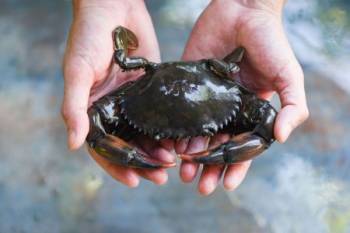


BHUBANESWAR, 11 July 2025: The introduction of scientific mud crab farming under the Enhancing Climate Resilience of India’s Coastal Communities (ECRICC) project is transforming livelihoods in coastal Odisha, offering both economic and ecological dividends to local fishing communities.
Traditionally reliant on natural catch methods in the Chilika region, fishers—especially women—have embraced the transition to structured, scientific cultivation of mud crabs, which has led to a significant rise in income levels and export potential. The project was introduced in 2024 and is backed by the Ministry of Environment, Forest and Climate Change (MoEFCC), the Green Climate Fund (GCF), and the United Nations Development Programme (UNDP).
“The ECRICC project has been a game changer,” said Spandita Kar, Project Manager. “We began with training and technical assistance from the Rajiv Gandhi Centre for Aquaculture (RGCA), Chennai. Now, women fishers are the project’s Climate Champions, leading the way across four districts.”
Currently, over 304 women Climate Champions are supporting crab farming activities in Ganjam, Balasore, Kendrapara, and Puri. These women not only cultivate organically but also train others, marking a grassroots-led success model. With 70% of the input costs subsidised, the project ensures inclusive access to sustainable aquaculture.
Mud crabs, grown in controlled pond systems, reach marketable size in six months, with up to 30% of yields weighing between 1.5 to 2 kg. Prices range from ₹500 to ₹3,000 per kg, depending on size and market demand.
Export operations are overseen by the Marine Products Export Development Authority (MPEDA), with consignments sent to China and Bangladesh via Kolkata. Plans are underway to establish Odisha’s first crab hatchery in Paradip in partnership with the state Fisheries Department, to ensure seed sustainability.
Kar highlighted the ecological benefits, noting that the farming practices are organic and environmentally safe. “In the last six months, farmers have seen 50% returns on their investment. We anticipate even higher profits as the model matures,” she added.
The initiative aligns with the project’s primary goal of climate adaptation and resilience in coastal areas, especially in states like Odisha, Maharashtra, and Andhra Pradesh.
Image credit: asiafarming.com