





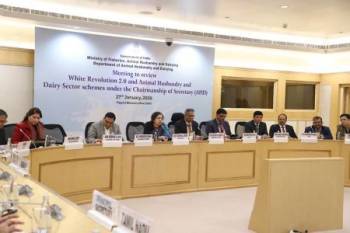


NEW DELHI, 27 January 2026: India’s Department of Animal Husbandry and Dairying (DAHD) has pressed states and union territories to accelerate fund utilisation and tighten on-ground execution of livestock and dairy schemes, as New Delhi seeks faster outcomes under the White Revolution 2.0 programme and the closing phase of the current Finance Commission cycle.
Chairing a national review meeting at Vigyan Bhawan, Secretary Naresh Pal Gangwar told senior state officials that timely deployment of central allocations and strict adherence to standard operating procedures are critical to delivering measurable benefits to livestock farmers.
The session brought together Additional Chief Secretaries, Principal Secretaries and scheme heads from across states, alongside senior central officials including Additional Secretaries Varsha Joshi and Rama Shankar Sinha, Animal Husbandry Commissioner Dr. B. Maheswarappa Naveena, NDDB Chairman Meenesh Shah and representatives from the Ministry of Cooperation.
Gangwar reviewed physical and financial progress across flagship schemes including the National Programme for Dairy Development (NPDD), Rashtriya Gokul Mission (RGM), National Livestock Mission (NLM) and the National Digital Livestock Mission (NDLM). The ministry flagged uneven fund absorption and implementation delays in some states, urging faster project execution and full utilisation of approved budgets before the fiscal year-end.
White Revolution 2.0, the government’s next phase of dairy and livestock productivity reforms, aims to scale milk output, strengthen breed improvement, modernise veterinary infrastructure and digitise livestock databases to enhance traceability and service delivery.
Officials said improved financial performance and infrastructure compliance—particularly under NDLM and standard veterinary facility guidelines—will be central to achieving broader rural income and employment targets aligned with the Viksit Bharat agenda.
Sector analysts note that dairy and livestock remain among India’s most resilient rural growth engines, with higher public investment expected to crowd in private participation across processing, genetics, feed and animal health.
The ministry signalled that closer monitoring and milestone-based releases could follow to ensure states deliver time-bound results and maximise farmer impact.