







NEW DELHI, 18 November 2026: India’s rabi crop sowing declined nearly 46% year-on-year to 37.56 lakh hectares as of October 30, compared with 69.02 lakh hectares during the corresponding period last year, according to the Ministry of Agriculture and Farmers Welfare.
The slow start to the winter cropping season has been driven by a sharp decline in early wheat planting, alongside lower acreage under pulses and oilseeds. Reduced residual soil moisture following a deficient monsoon has added to the challenges facing farmers.
Wheat sowing stood at just 19,000 hectares, compared with 3.34 lakh hectares at the same point last year, marking a decline of more than 94%. However, the current acreage remains an early-season figure, with planting expected to continue over the coming weeks.
Pulses and oilseeds record sharp declines
Pulses acreage fell 51.69% to 9.45 lakh hectares, against 19.56 lakh hectares a year earlier.
Among major pulses, chickpea (gram) sowing declined 58.91% to 5.90 lakh hectares. Lentil acreage fell 48.51%, while pea sowing decreased 32.71%.
Oilseed acreage dropped 45.7% to 20.97 lakh hectares. Rapeseed and mustard, the major contributors to winter oilseed production, recorded a 46.16?cline to 20.50 lakh hectares. Linseed sowing fell 82.1%.
In contrast, groundnut and sunflower acreage increased from relatively small bases.
Winter-sown paddy recorded a comparatively modest decline of 3.76%, with acreage reaching 3.16 lakh hectares.
Ministry says it is too early to assess the season
Agriculture experts cited by the ministry have linked the slow start to a 13?ficient southwest monsoon during June–September, which reduced residual soil moisture available for winter crop planting.
A senior Agriculture Ministry official said on November 6 that it was too early to draw conclusions about the rabi season, as sowing can continue through December. November remains a critical period for farmers to make up for the initial shortfall.
For the first time, the ministry has prepared a contingency plan covering 225 districts. Officials said the plan is dynamic and may be revised depending on changing weather conditions.
Agriculture Minister calls for faster sowing
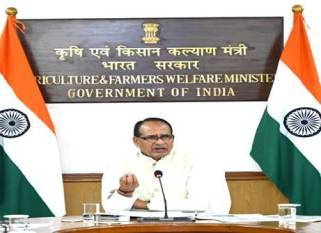
Union Agriculture Minister Shivraj Singh Chouhan chaired a review meeting on rabi sowing progress and directed officials to accelerate planting by making better use of residual soil moisture following the kharif harvest.
He advised farmers with limited irrigation access to prioritise short-duration and drought-tolerant crops, including chickpea, mustard, lentil and millets, rather than more water-intensive alternatives.
The ministry also said supplies of major fertilisers, including urea, di-ammonium phosphate (DAP), muriate of potash (MOP) and NPK fertilisers, remain adequate to meet farmers' requirements as sowing gathers pace through November.
Officials further indicated that a new soil health policy could be announced within the next three to four months.
The coming weeks will be crucial in determining whether improved soil moisture conditions and faster planting can narrow the early-season rabi acreage gap.