






Blockchain technology is transforming agricultural supply chains by improving food traceability, transparency and security while opening new career opportunities in AgriTech
MUMBAI, 5 October 2026: Blockchain technology is emerging as a tool for improving transparency, food safety and efficiency across agricultural supply chains, as the agriculture sector increasingly adopts digital solutions.
From tracking crops at farms to monitoring food products during transportation and processing, blockchain-based systems can create shared digital records of agricultural products throughout their journey from farm to consumer.
Traditional agricultural supply chains often face challenges such as fragmented documentation, food fraud, delayed payments, limited traceability and multiple intermediaries. These issues can affect farmers' earnings, increase operational costs and make it difficult for consumers to verify the origin and quality of food.
Blockchain offers a way to address some of these challenges by recording transactions and product information on a distributed digital ledger. Once validated and recorded, information is difficult to alter without the network's agreement, helping authorized participants maintain consistent records.
The technology is also creating opportunities for agricultural technology (AgriTech) companies, researchers, students and professionals working in digital agriculture, supply chain management and sustainable farming.
What is blockchain technology in agriculture?
Blockchain is a distributed digital ledger that records transactions across a network of computers. Instead of relying on a single central database, it allows multiple authorized participants to access a shared record of information.
In agriculture, blockchain can be used to record information about seeds, cultivation methods, harvesting, transportation, storage, processing and retail distribution.
Its key features include:
- Transparency: Authorized participants can access shared supply chain records.
- Security: Cryptographic techniques help protect transaction records.
- Immutability: Validated records are designed to resist unauthorized changes.
- Decentralization: Data management can be distributed across network participants.
- Traceability: Agricultural products can be tracked across different supply chain stages.
These features can help farmers, agribusinesses, food processors, exporters and retailers improve coordination and maintain more reliable product histories.
However, blockchain cannot independently verify whether information entered into the system is accurate. Reliable data collection and validation remain essential to its effectiveness.
How blockchain works in agricultural supply chains
Blockchain can support agricultural supply chains by recording information at different stages of production and distribution.
Farm production
Farmers and agricultural organizations can record seed varieties, soil conditions, fertilizer applications, pesticide usage, irrigation schedules, crop growth and harvest dates.
These records can create a digital history of agricultural production, helping buyers and other stakeholders understand how crops were cultivated.
Collection and transportation
Once crops are harvested, blockchain-based systems can record transportation routes, vehicle details, delivery schedules and storage conditions.
When integrated with Internet of Things (IoT) sensors, these systems can also capture temperature and humidity data, particularly for perishable agricultural products.
Food processing and packaging
Food processors can record quality inspection reports, laboratory test results, food safety certifications, processing dates, packaging details and batch numbers.
This information can help organizations trace products and identify affected batches when quality or safety concerns arise.
Distribution and retail
Distributors and retailers can use shared digital records to monitor inventory movements, warehouse activities and delivery confirmations.
Improved information sharing can support inventory management and help reduce losses caused by poor coordination.
Consumer verification
Consumers can scan QR codes on product packaging to access available information about a product's origin, cultivation practices, harvest date, transportation history and certifications.
Such systems can improve product transparency and help consumers make more informed purchasing decisions.
Six benefits of blockchain in agriculture
Blockchain applications offer several potential benefits for agricultural supply chains.
1. End-to-end food traceability
Blockchain can create a continuous digital record of agricultural products, from cultivation to retail distribution.
Farmers, processors and retailers can use these records to trace crop varieties, harvest dates, transportation conditions, storage information and processing history.
Improved traceability can also help businesses investigate quality issues and identify the source of affected products.
2. Improved food safety and quality control
Food contamination can lead to product recalls, financial losses and risks to public health.
Blockchain-based traceability systems can help companies identify the movement of potentially contaminated products and locate affected batches more efficiently.
When combined with accurate inspection reports, laboratory results and logistics data, these systems can support food safety monitoring and regulatory compliance.
3. Greater supply chain transparency
Agricultural products often pass through several intermediaries before reaching consumers.
Blockchain can provide authorized stakeholders with access to shared records of transactions, inventory movements, product ownership and delivery confirmations.
This may reduce information gaps, improve accountability and help resolve disputes involving product quality, pricing and ownership.
4. Faster payments and improved farmer access to markets
Blockchain-based smart contracts can automate certain payment processes when predefined conditions are met.
For example, a smart contract could release payment after a delivery has been confirmed and required quality conditions have been verified.
Such systems could reduce paperwork, shorten payment processing times and support more direct transactions between farmers and buyers.
However, faster payments and improved farmer incomes are not guaranteed. Their impact depends on contract terms, market access, transaction costs and the availability of supporting financial infrastructure.
5. Reduced food fraud and product mislabeling
Fraudulent organic labels, inaccurate geographical indications and misleading product claims can undermine consumer confidence.
Blockchain can provide traceable records of product origin, certification details and transactions, making unauthorized changes to recorded information more difficult.
The technology is most effective when combined with independent inspections and trusted certification processes.
6. Support for sustainable and climate-smart agriculture
Blockchain can record agricultural practices and resource consumption, including water usage, fertilizer applications, renewable energy adoption and estimated carbon emissions.
Agribusinesses and supply chain partners can use this information to monitor sustainability indicators and document responsible production practices.
These records may also support sustainability reporting and agricultural programs that require evidence of specific farming practices.
Real-world applications of blockchain in agriculture
Blockchain has been explored and deployed in several areas of agricultural production, food distribution and international trade.
Application Potential use
- Organic food certification Record cultivation practices and inspection reports
- Seed traceability Track seed batches from production to distribution
- Dairy supply chains Monitor temperature, transportation and processing
- Livestock management Maintain animal health, vaccination and feed records
- Agricultural exports Digitize documentation and improve shipment traceability
- Grain trading Record transactions, deliveries and farmer payments
Several companies and technology initiatives have been associated with blockchain-based food traceability and agricultural supply chain solutions.
Blockchain, AI and IoT: The future of smart farming
Blockchain's potential in agriculture extends beyond digital record-keeping. Its integration with artificial intelligence, IoT, drones and precision farming technologies could create more connected agricultural supply chains.
- Artificial intelligence: AI can analyze weather patterns, crop health, soil conditions and pest risks to support agricultural decision-making.
- Internet of Things: Sensors can collect real-time data on soil moisture, temperature, humidity and water availability. Blockchain can support the integrity and traceability of the resulting records.
- Drones and remote sensing: Drones and satellites can monitor crop health, detect diseases and estimate yields. Their data can be linked to blockchain records for traceability and verification.
- Smart contracts: Automated agreements can support payments, delivery confirmations, quality checks and other transactions when predefined conditions are met.
Together, these technologies could improve resource management, supply chain coordination and the availability of agricultural information.
However, the practical value of combining them will depend on implementation costs, data quality, interoperability and the needs of individual farming communities.
Why agriculture students should learn blockchain
Digital transformation is changing the skills required across agriculture and agribusiness.
Students pursuing agricultural sciences, food technology, agricultural engineering, supply chain management and business administration can benefit from understanding blockchain and its applications.
- Learning blockchain technology can help students:
- Understand digital agricultural supply chains.
- Explore emerging AgriTech solutions.
- Develop knowledge of food traceability and product verification.
- Identify opportunities in precision and smart farming.
- Understand digital transactions and automated agreements.
- Develop technology-enabled agribusiness ideas.
Combining agricultural knowledge with blockchain, AI, IoT, geographic information systems (GIS) and data analytics can prepare students for a wider range of technology-focused career paths.
Career opportunities in blockchain and agriculture
As digital agriculture develops, professionals who understand both agricultural operations and emerging technologies may find opportunities across AgriTech companies, food processing businesses, logistics firms, research institutions and agricultural service providers.
Potential career roles include:
Career Key responsibilities
- Blockchain Supply Chain Analyst Analyze digital records and supply chain processes
- AgriTech Consultant Advise businesses on agricultural technology adoption
- Agricultural Data Analyst Interpret agricultural and production data
- Precision Agriculture Specialist Support technology-enabled farm management
- Smart Farming Executive Coordinate digital farming operations
- Food Safety and Quality Analyst Monitor product quality and traceability records
- Agricultural Export Manager Manage agricultural trade and export processes
- Digital Agriculture Research Associate Study emerging agricultural technologies
- Agribusiness Development Manager Develop partnerships and business opportunities
- Farm Technology Consultant Help farmers and businesses implement digital tools
The availability of these positions will vary by market, employer and technical requirements. Some roles require specialized software development, data engineering or agricultural expertise, while others focus on business operations and technology adoption.
Essential skills for a career in digital agriculture
Students and professionals seeking careers in blockchain-enabled agriculture can build a combination of technical and professional skills.
Technical skills
- Blockchain fundamentals
- Smart contract concepts
- AI applications in agriculture
- IoT systems and sensor technology
- Precision agriculture
- GIS and remote sensing
- Drone applications
- Agricultural data analytics
- Cloud computing
- Smart irrigation systems
Professional skills
- Problem-solving
- Data interpretation
- Communication
- Project management
- Critical thinking
- Innovation and entrepreneurship
- Team collaboration
Relevant certifications in blockchain fundamentals, smart contracts, GIS, agricultural data analytics, precision farming and supply chain management can complement academic qualifications and practical experience.
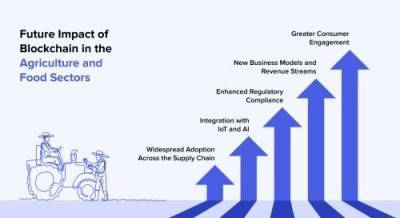
Future scope of blockchain technology in agriculture
Blockchain could become a useful component of future agricultural systems, particularly where multiple organizations need to share reliable records.
Several areas offer potential for further development.
- Smart farming: Integration with IoT sensors and AI-powered analytics could improve agricultural monitoring and information sharing.
- Precision agriculture: Digital records linked to satellite, drone and sensor data could support crop management and resource planning.
- Agricultural finance: Blockchain applications could support digital payments, crop insurance documentation and automated financial agreements.
- Agricultural exports: Shared digital documentation could improve traceability and streamline information exchange across international supply chains.
- Sustainable agriculture: Recorded data on water use, fertilizer applications and carbon emissions could support environmental monitoring and sustainability reporting.
Wider adoption will depend on addressing challenges such as implementation costs, connectivity, data accuracy, regulatory requirements and the digital skills available to farmers and supply chain participants.
For India, where agricultural supply chains involve millions of producers, traders, processors and consumers, the integration of blockchain with existing digital agriculture infrastructure could create opportunities for more efficient and transparent food systems.
Blockchain technology has the potential to improve agricultural supply chains by strengthening product traceability, supporting food safety, improving information sharing and automating selected transactions.
Its integration with AI, IoT, drones and precision agriculture could further expand its applications in modern farming and food distribution.
At the same time, blockchain is not a standalone solution to agricultural challenges. Accurate data, affordable infrastructure, effective governance and farmer participation remain essential to achieving meaningful results.
For agriculture students, researchers, technology professionals and aspiring agripreneurs, understanding blockchain offers a way to explore the intersection of agriculture and digital innovation as the sector continues to evolve.
Image credit: appinventiv.com