





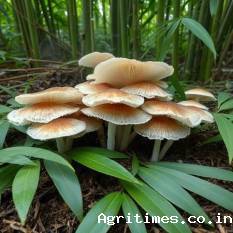


RATNAGIRI, 26 June 2025: Bamboo mushroom farming is a high-value, low-volume cultivation venture that requires controlled environmental conditions, deep knowledge of fungal growth, and access to organic biomass. Though challenging, it can be extremely profitable, especially for farmers near forests or in humid, subtropical zones.
What Are Bamboo Mushrooms?
- Scientific Name: Phallus indusiatus
- Also Known As: Veiled lady, bamboo pith mushroom
- Use: Culinary delicacy, traditional medicine, nutraceuticals
- Lifecycle: Grows from an underground "egg" and matures within hours
- Structure: Features a white, lacy skirt (indusium) hanging from the cap
Ideal Conditions for Bamboo Mushroom Cultivation
Factor Requirement
Temperature 22–28°C (constant warm environment)
Humidity 80–90% relative humidity
Light Low to moderate (prefers shade)
Substrate Bamboo leaves, sawdust, wood chips, organic compost
Altitude 500–1500 meters is ideal
pH of Substrate 6.0–7.5 (slightly acidic to neutral)
Best Indian States for Bamboo Mushroom Farming
Naturally Suitable Regions:
- Meghalaya – High humidity, forest biomass, tribal farming knowledge
- Arunachal Pradesh – Cool temperatures, forest cover
- Nagaland & Manipur – Wild mushroom foraging traditions
- Odisha – Especially in Koraput and forested tribal belts
- Chhattisgarh – Dense sal forests, traditional knowledge base
- Kerala & Western Ghats – Ideal monsoon climate and biomass
- Maharashtra (Konkan belt) – High rainfall, suitable for monsoon-based cultivation
- Assam – Wet climate and bamboo groves
- Sikkim & Darjeeling Hills – Controlled altitude and misty climate
Note: In other drier or temperate states, indoor cultivation using polyhouses or mushroom chambers is essential.
Step-by-Step Bamboo Mushroom Farming Process
1. Prepare the Substrate
- Use a mix of bamboo leaves, decaying hardwood sawdust, rice husk, wheat straw, and composted cow dung
- Pasteurize or sterilize the substrate by steam treatment or hot water soaking
- Maintain moisture at 65–70%
2. Obtain Quality Spawn
- Bamboo mushroom spawn is not widely available in India and may need to be sourced from:
- Research institutes (e.g., ICAR, DBT centers)
- Chinese or Thai spawn suppliers
- Cultured from wild samples with the help of mycology labs
3. Filling and Inoculation
- Fill plastic grow bags or wooden beds with the prepared substrate
- Add 3–5% spawn by weight
- Incubate in dark, moist chambers at 24–26°C for 20–30 days until mycelium colonizes the substrate
4. Fruiting Conditions
- Shift to fruiting room (80–90% humidity)
- Mist regularly to maintain surface moisture
- Maintain airflow but avoid direct drafts or light
- Mushrooms will emerge from “eggs” and must be harvested within 4–5 hours of maturity
5. Harvest and Post-Harvest
- Harvest early morning when the lace (indusium) is intact
- Dry at 45–50°C in a hot air dryer or solar drier
- Vacuum-pack or seal in airtight packaging to retain aroma
Economics: Profit Potential
Parameter Estimate (per 100 sq ft batch)
Investment (setup + spawn) INR 30,000 – INR 50,000
Yield 8–10 kg dried mushrooms
Market Price INR 3,000–INR 7,000/kg (retail/export)
Net Profit (per cycle) INR 20,000 – INR 50,000
Crop Cycle 2–3 months
With value-added processing (like soup packets or medicinal extracts), margins can be significantly higher.
Challenges and Tips
Challenge Solution
Spawn scarcity Collaborate with biotech institutes or develop your own
Delicate fruiting body Schedule regular monitoring and harvest quickly
Post-harvest losses Invest in proper drying and packaging units
Market linkage Target hotels, wellness brands, exporters, or vegan brands
Lack of awareness Organize demo farms and farmer cooperatives
Institutions That Can Help:
- ICAR-Directorate of Mushroom Research (Solan, HP)
- TNAU (Tamil Nadu Agricultural University)
- IIFPT (Food Processing Institute)
- Indian Institute of Forest Management (Bhopal)
- NEHU (Shillong) – Mycology & Mushroom Research
Bamboo mushroom farming in India offers a premium opportunity for agroforestry, eco-farming, and tribal entrepreneurship. Though it requires investment in controlled environments and training, the high market value and medicinal demand make it an attractive choice for progressive farmers and FPOs in suitable states.
Note: Check with the nearest KVKs or ICARs before moving to any new farm practices.