





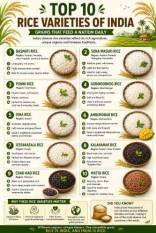


MUMBAI, 12 June 2026: Rice is more than just a staple food in India—it is a way of life. From the fertile plains of Punjab to the lush deltas of Tamil Nadu and the floodplains of Assam, rice has shaped the country’s agricultural landscape, economy, and culinary traditions for centuries. India is the world’s second-largest producer of rice and is home to thousands of indigenous rice varieties, each possessing unique characteristics in terms of aroma, texture, flavor, and nutritional value.
While hundreds of rice cultivars are grown across the country, a select few have earned national and international recognition for their quality and cultural significance. These varieties not only feed millions but also represent the diversity of India’s farming heritage.
1. Basmati Rice – The King of Aromatic Rice
No discussion about Indian rice is complete without Basmati. Cultivated primarily in Punjab, Haryana, Uttar Pradesh, and parts of Jammu & Kashmir, Basmati is famous for its long grains, exquisite aroma, and fluffy texture after cooking.
The variety enjoys strong demand in international markets and is a major agricultural export for India. Biryani, pulao, and festive rice dishes are often incomplete without premium Basmati.
2. Sona Masuri – South India’s Favorite
Widely grown in Andhra Pradesh, Telangana, and Karnataka, Sona Masuri is known for its lightweight texture and mild aroma. It contains less starch compared to many other varieties, making it a preferred choice among health-conscious consumers.
The rice is commonly used for everyday meals, lemon rice, tamarind rice, and other South Indian delicacies.
3. Ponni Rice – The Pride of Tamil Nadu
Named after the River Kaveri, traditionally called Ponni, this rice variety is cultivated extensively in Tamil Nadu. Ponni rice is soft, nutritious, and widely consumed in southern India.
Its ability to absorb flavors makes it ideal for sambar rice, curd rice, and traditional South Indian meals.
4. Gobindobhog – Bengal’s Fragrant Treasure
West Bengal’s Gobindobhog rice is a premium short-grain aromatic variety known for its rich fragrance and soft texture. Traditionally offered in religious ceremonies, it is widely used in preparing khichuri, payesh, and festive dishes.
Despite its small grain size, Gobindobhog commands premium prices due to its unique taste and cultural significance.
5. Joha Rice – Assam’s Aromatic Gem
Assam is famous for Joha rice, a group of aromatic rice varieties known for their distinctive fragrance and excellent cooking qualities. Joha rice plays a key role in Assamese cuisine and is often used during festivals and family celebrations.
Its pleasant aroma and soft texture have made it increasingly popular outside the Northeast as well.
6. Ambemohar – Maharashtra’s Mango-Scented Rice
Ambemohar derives its name from its subtle mango blossom aroma. Cultivated primarily in Maharashtra, this traditional rice variety has been cherished for generations.
The rice is commonly used in local dishes and is particularly valued for its fragrance and soft texture. Farmers continue to preserve Ambemohar as an important part of Maharashtra’s agricultural heritage.
7. Jeerakasala – Kerala’s Biryani Rice
Jeerakasala, also known as Wayanad Kaima rice, is a prized aromatic variety from Kerala. Unlike long-grain Basmati, Jeerakasala has small grains but delivers exceptional flavor.
It is the preferred rice for the famous Malabar Biryani, one of India’s most celebrated rice-based dishes.
8. Kalanamak – The Buddha Rice
Kalanamak rice, cultivated in eastern Uttar Pradesh, is often referred to as the “Buddha Rice” due to its historical association with the region where Lord Buddha is believed to have traveled.
The variety is distinguished by its black husk, unique aroma, and high nutritional value. Recent efforts by agricultural institutions have helped revive interest in this ancient grain.
9. Chak-Hao – Manipur’s Black Rice
One of India’s most unique rice varieties, Chak-Hao from Manipur is known for its striking black color and rich antioxidant content. Often referred to as black rice, it turns deep purple when cooked.
Traditionally used in desserts and ceremonial dishes, Chak-Hao has gained attention among health-conscious consumers due to its nutritional benefits.
10. Matta Rice – Kerala’s Nutritional Powerhouse
Kerala’s Matta rice, also known as Red Rice, is characterized by its reddish outer layer and distinct flavor. Rich in fiber, minerals, and nutrients, it is a staple in many households across the state.
Unlike polished white rice, Matta retains much of its natural goodness, making it a popular choice among nutritionists and health-conscious consumers.
The Backbone of Indian Agriculture
Rice cultivation supports millions of farmers across India. Beyond providing food security, the crop generates employment in farming, processing, transportation, and exports. Advances in irrigation, seed technology, and mechanization have significantly improved productivity, helping India maintain its position as a global rice powerhouse.
At the same time, conservation of traditional rice varieties has become increasingly important. Many indigenous cultivars possess valuable traits such as drought tolerance, flood resistance, superior nutrition, and unique flavors that can help address future agricultural challenges.
Preserving India’s Rice Heritage
India's rice diversity represents centuries of farmer innovation and adaptation. From the aromatic fields of Punjab to the black rice farms of Manipur, each grain carries a story of culture, geography, and tradition.
As consumers become more interested in regional foods and sustainable agriculture, traditional rice varieties are experiencing a revival. Supporting these varieties not only benefits farmers but also helps preserve a rich agricultural legacy for future generations.
The top 10 rice varieties featured here offer only a glimpse into India’s extraordinary rice heritage. Together, they demonstrate why rice remains not just a crop, but a cornerstone of the nation’s identity, cuisine, and economy.