





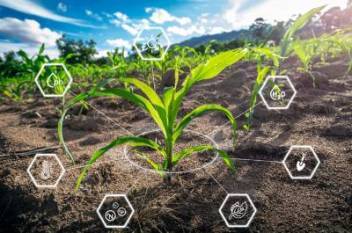


The initiative, described as a collaboration involving agri-tech startups and government support, aims to deploy AI-based tools for weather forecasting, irrigation management, soil monitoring and pest control. The goal is to provide farmers with timely information to make better decisions amid increasingly unpredictable weather conditions.
The program is focused on small-scale farmers, who often have limited financial resources and are particularly exposed to droughts, floods, irregular rainfall and other climate-related disruptions.
AI-powered farming systems use machine learning and agricultural data to analyze soil conditions, estimate water requirements, forecast potential crop yields and identify pest-related risks. Such tools could help farmers reduce input costs, improve resource allocation and protect crops from adverse weather.
The initiative also reflects a broader effort to integrate digital technologies into India's agricultural sector, where farming remains a major source of rural employment and livelihoods.
AI adoption faces challenges in rural India
India's agricultural sector presents both significant opportunities and considerable challenges for precision farming.
Fragmented landholdings, limited access to technology, inadequate rural internet connectivity and varying levels of digital literacy could slow the adoption of AI-powered agricultural tools.
The cost of equipment, software and data services is another potential barrier, particularly for farmers operating on small plots with limited access to credit.
The reliability of AI-based recommendations will also depend on the quality and availability of agricultural data. Inconsistent soil records, localized weather variations and differences in farming practices could affect the accuracy of predictions.
Experts have widely identified data quality, infrastructure and affordability as important considerations in the adoption of digital agriculture. Without addressing these barriers, technology-driven initiatives risk delivering greater benefits to larger or better-resourced farms than to the farmers most vulnerable to climate change.
Precision agriculture creates opportunities for agri-tech startups
The growing adoption of AI in agriculture is creating opportunities for technology providers, agricultural research institutions and startups developing digital farming solutions.
Companies working on satellite-based crop monitoring, predictive analytics, automated irrigation, agricultural drones and farm management software could benefit from greater demand for precision farming services.
Partnerships between government agencies, technology companies, financial institutions and agricultural organizations could help expand access to these tools.
For policymakers, AI-powered agriculture offers a potential way to improve agricultural efficiency, strengthen rural economies and support long-term food security.
However, the effectiveness of these solutions will depend on their affordability, practical value and accessibility across different farming communities.
Climate resilience and food security remain key priorities
Climate change continues to pose risks to agricultural production worldwide. Rising temperatures, shifting rainfall patterns and extreme weather events can affect crop growth, water availability and farm incomes.
In India, where agricultural production varies significantly across regions and seasons, localized weather information and efficient resource management could help farmers prepare for changing conditions.
AI-based systems may support decisions on planting schedules, irrigation requirements, fertilizer application and pest management. Their usefulness, however, will depend on how effectively they are integrated into existing agricultural practices.
Agricultural extension services, farmer training programs and local-language digital platforms could play an important role in helping small-scale farmers understand and use these technologies.
The initiative's longer-term impact will need to be assessed through measurable outcomes, including changes in crop yields, water consumption, input costs, farm incomes and resilience to extreme weather.
India’s AI agriculture ambitions depend on implementation
The initiative highlights the potential of combining artificial intelligence with traditional farming knowledge to address agricultural challenges.
Pilot programs could provide insights into which technologies work best for particular crops, regions and farming conditions. Their findings could guide future investments and inform efforts to expand precision farming across the country.
However, nationwide adoption will require sustained investment in rural infrastructure, reliable agricultural data, affordable technology and farmer education.
India's experience could also offer lessons for other developing economies seeking to use digital technologies to improve agricultural productivity and climate resilience.
Ultimately, the success of AI-powered precision farming will depend not only on technological innovation but also on whether small-scale farmers can access, afford and benefit from these solutions.
By Jagdish Kumar
Image credit: agfundernews.com