





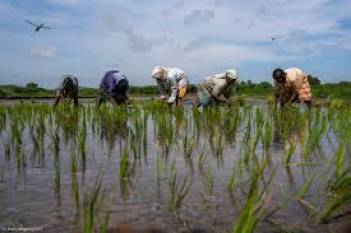


MUMBAI, 6 July 2025: Investments totalling nearly USD 75 billion are required for small-scale farmers in India to adapt to mounting climate change challenges, International Fund for Agricultural Development (IFAD) President Alvaro Lario has said.
Speaking to PTI, Lario underscored that rural communities globally — and in India — face a critical challenge in accessing climate finance, which remains disproportionately low for small producers.
“Small-scale farmers need at least USD 75 billion to adapt to many of these climate shocks,” he said, highlighting that less than one per cent of global climate finance reaches smallholder producers despite their vulnerability to extreme weather.
According to India’s 10th agriculture census, small and marginal farmers with holdings under two hectares form 86.2 per cent of India’s farming community but own only 47.3 per cent of the cultivated area.
“Seasonal water scarcity, rising temperatures, and frequent droughts are stressing these farmers. There is much potential for investing in improved water management, drought-resistant seeds, crop diversification, and micro irrigation,” Lario explained.
He praised initiatives like the Soil Health Card scheme, which gives farmers customised soil management advice, as well as incentives to adopt water-saving technologies.
The IFAD head cited several ongoing projects, including climate-resilient practices in Maharashtra, Meghalaya, Mizoram, and Odisha that integrate sustainability with income generation.
In Meghalaya, IFAD has supported agri-entrepreneur incubation programmes, while in Mizoram, integrated farming models combining crops, livestock, and agroforestry have been promoted.
“We are also introducing weather-based crop planning, aligning sowing with rainfall forecasts to manage climate risk,” he said.
Lario stressed that unlocking finance, particularly long-term and private capital, is vital. “We’re co-investing with the private sector in agri-enterprises and local financial institutions to strengthen value chains,” he said.
He noted IFAD’s alignment with India’s strategies for inclusive rural development, with investments of over USD 1.5 billion in India reaching more than 6 million families over the past 45 years.
“Agriculture accounts for about 20 per cent of India’s GDP and employs around 42 per cent of its workforce. Continuing investments in pro-poor, inclusive value chains are crucial for food and nutrition security,” he said.
IFAD, established in 1977, is a specialised UN agency focusing on ending rural hunger and poverty.
Image credit: share.america.gov