





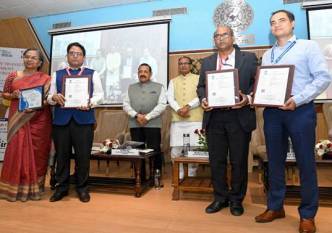


The technology, titled “Bio-Bitumen from Lignocellulosic Biomass – From Farm Residue to Roads”, was showcased at a technology transfer event in New Delhi, attended by Union Minister Shivraj Singh Chouhan and Minister of State for Science & Technology Jitendra Singh, along with senior policymakers, scientists and industry stakeholders.
Bridging agriculture and infrastructure
Chouhan described the innovation as a “transformative step” linking agriculture with infrastructure and sustainability. He noted that using farm residue for road construction could provide additional income streams for farmers while addressing stubble burning and environmental pollution.
The initiative aligns with India’s climate goals, including Net Zero commitments, and supports programmes such as Atmanirbhar Bharat and circular economy frameworks.
Cleaner alternative to petroleum-based bitumen
Developed by CSIR-Central Road Research Institute and CSIR-Indian Institute of Petroleum, the technology uses lignocellulosic biomass through a thermochemical conversion process to produce bio-bitumen.
Officials said the material has demonstrated performance comparable to conventional bitumen while offering a lower carbon footprint and reduced dependence on imported petroleum products.
The technology is being positioned for adoption in road construction projects under the Ministry of Road Transport and Highways.
Boost to ‘waste to wealth’ mission
Speaking at the event, Singh highlighted that the initiative reflects India’s push towards self-reliance and clean energy transition, driven by the “waste to wealth” approach. He added that the technology has shown promising durability and compatibility with existing materials, making it viable for large-scale deployment.
From lab to large-scale adoption
CSIR Director General N. Kalaiselvi said the development marks a shift from petro-based to bio-based materials, with a focus on translating research into real-world applications.
The technology transfer is expected to accelerate industry adoption, reduce emissions, and support sustainable road infrastructure, while simultaneously addressing agricultural waste management challenges.