







ADELAIDE / Australia, 10 May 2026: Researchers from University of Adelaide have demonstrated that a naturally derived seaweed compound can significantly reduce methane emissions in beef cattle raised under grazing conditions, offering a potential breakthrough for sustainable livestock production.
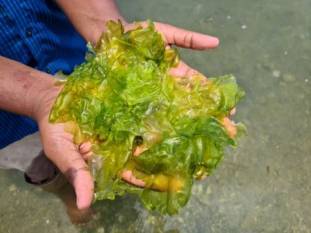
The study, published in Frontiers in Animal Science, evaluated the impact of bromoform extract oil derived from the red seaweed Asparagopsis in pregnant and lactating Angus cows.
According to the researchers, methane emissions were reduced by 49% to 77% during the eight-week trial involving 80 Angus cows. The findings are considered significant because extensive grazing systems are typically more challenging for controlled feed supplementation compared to feedlots.
Kellie Wenham, PhD student at the School of Animal and Veterinary Sciences, said the results indicate strong potential for reducing livestock emissions under real-world farming conditions.
“This is a substantial reduction, particularly in an extensive system where delivering consistent supplementation can be difficult,” she noted.
No adverse impact on calf growth
The study also found no negative effects on calf development. Calves born to supplemented cows recorded normal weight gain from birth up to 150 days of age, suggesting no harmful carry-over effects from maternal supplementation.
Dr Mariana Caetano, corresponding author of the study, said maintaining calf health is critical in breeding systems.
“In breeding systems, it’s not just about the cow — you need to be confident there are no unintended consequences for their offspring,” she said.
Researchers further observed that the cows maintained stable body weight despite consuming slightly less feed, which could potentially lower feed costs for cattle producers.
Scope for climate-smart livestock production
Methane is estimated to account for nearly 30% of global temperature rise since the industrial revolution, according to the International Energy Agency. Scientists believe practical methane mitigation technologies will play a key role in decarbonising the livestock sector.
While the results are promising, the study identified mild metabolic alkalosis in some supplemented animals, highlighting the need for further long-term research into dosage optimisation and animal health impacts.
The research team said future studies will focus on refining supplement delivery systems and evaluating commercial scalability for pasture-based beef farming systems, particularly in countries such as Australia where grazing dominates livestock production.